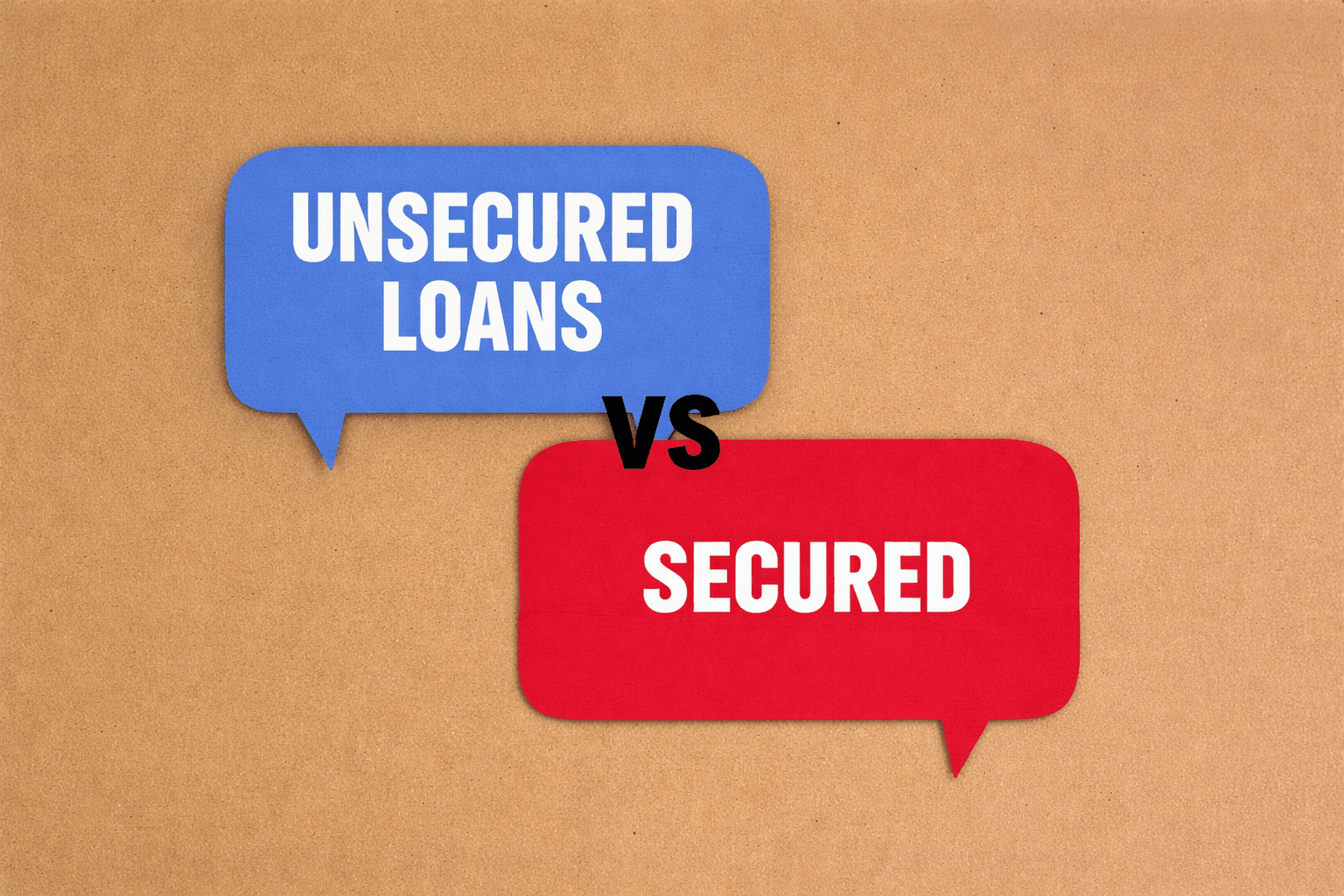
Choosing between unsecured business loans and secured business loans is one of the most important financial decisions a business owner will make.
The type of business financing you choose affects:
- Your interest rate
- Your monthly payments
- Your approval odds
- Your risk exposure
- Your long-term capital structure
Many business owners focus only on the speed of funding. Others focus only on interest rates. The smartest borrowers evaluate the complete structure of the loan, including risk, cost, repayment flexibility, and lender strategy.
This guide explains the true differences between secured and unsecured business loans, how lenders evaluate applications, current business loan interest rates in 2026, and how to choose the right commercial lending partner.
What Is a Secured Business Loan?
A secured business loan is a financing structure backed by collateral. Collateral is an asset pledged to a lender as protection in case the borrower defaults.
In commercial lending, common collateral includes commercial real estate, heavy equipment, inventory, accounts receivable, or other business assets. Because the lender has a claim on tangible property, secured business loans are considered lower risk.
Lower lender risk typically results in:
- Lower business loan interest rates
- Higher borrowing limits
- Longer repayment terms
- More flexible amortization structures
Secured business loans are most commonly used for commercial real estate financing, equipment purchases, expansion projects, and long-term asset acquisition.
When structured correctly, secured financing can strengthen a company’s balance sheet and support strategic growth.
What Is an Unsecured Business Loan?
An unsecured business loan does not require specific collateral to be pledged. Instead of evaluating assets, lenders analyze creditworthiness, business cash flow, revenue stability, and financial performance.
Because unsecured business loans carry more risk for the lender, they generally come with:
- Higher interest rates
- Shorter repayment terms
- Lower loan amounts
- Stronger credit requirements
However, unsecured business loans provide speed and flexibility. Many working capital loans, business lines of credit, and short-term loans fall into this category.
For businesses that need immediate liquidity without risking property or equipment, unsecured business financing can be a practical solution.
Secured vs Unsecured Business Loans: Structural Differences
The core difference between secured and unsecured business loans lies in risk distribution.
With secured business loans, the lender reduces risk through collateral. With unsecured business loans, the lender relies heavily on borrower credit strength and cash flow analysis.
Secured financing often supports long-term investment in real estate or fixed assets. Unsecured financing often supports operational cash flow needs or short-term growth strategies.
Understanding this structural distinction is essential when evaluating business financing options.
Business Loan Interest Rates in 2026
Interest rates for secured and unsecured business loans vary based on credit profile, industry risk, loan term, and economic conditions.
In 2026, typical ranges include:
Secured financing often supports long-term investment in real estate or fixed assets. Unsecured financing often supports operational cash flow needs or short-term growth strategies.
Unsecured business loans: commonly between 9% and 25%, depending on credit strength and repayment term.
Commercial real estate loans and SBA-backed financing may offer more competitive rates due to government guarantees or asset security.
While unsecured business loans offer convenience, secured business loans often deliver significant savings over time due to lower interest costs.
When Secured Business Loans Make More Financial Sense
Secured business loans are often ideal for:
- Long-term commercial real estate purchases.
- Equipment financing with multi-year depreciation value.
- Refinancing higher-interest debt.
- Large expansion projects require substantial capital.
- Businesses seeking predictable long-term payments.
For example, a company purchasing a commercial property may secure financing with a 15- or 20-year amortization. This reduces monthly payment pressure compared to short-term unsecured debt.
Secured business financing is particularly powerful for companies focused on asset growth and long-term stability.
When Unsecured Business Loans Make More Strategic Sense
Unsecured business loans are frequently used for:
- Short-term working capital loans.
- Inventory purchasing before peak season.
- Bridging temporary cash flow gaps.
- Emergency operational expenses.
- Marketing expansion campaigns.
If a business identifies a short-term opportunity requiring fast funding, unsecured financing may provide the flexibility needed without encumbering assets.
However, because unsecured business loan interest rates are typically higher, these loans are best used strategically and repaid efficiently.
How Commercial Lenders Evaluate Secured and Unsecured Loan Applications
Understanding lender evaluation criteria dramatically increases approval odds.
Regardless of loan type, commercial lenders examine:
- Cash flow consistency.
- Debt Service Coverage Ratio (DSCR).
- Business credit history.
- Personal credit score.
- Time in business.
- Existing debt obligations.
- Industry risk exposure.
For secured business loans, lenders additionally assess collateral valuation and lien position. For unsecured business loans, lenders rely more heavily on revenue performance and credit analysis.
A well-prepared borrower who understands these metrics will always have stronger negotiating leverage.
Hidden Costs Business Owners Overlook
When comparing secured and unsecured business loans, many borrowers focus solely on the interest rate.
However, total borrowing cost includes:
- Origination fees.
- Underwriting fees.
- Closing costs.
- Prepayment penalties.
- Collateral valuation fees.
- Legal documentation costs.
Secured business loans may have higher upfront documentation costs but lower lifetime interest expense. Unsecured business loans may appear simpler but carry higher effective APR when fees are included.
A full cost analysis is essential before signing any financing agreement.
Risk Comparison: Asset Risk vs Credit Risk
Secured business loans expose specific assets to lender claim if default occurs. This can include real estate, equipment, or other pledged property.
Unsecured business loans typically involve personal guarantees. While assets may not be directly pledged, default can damage personal and business credit and potentially lead to legal recovery efforts.
Both financing types carry risk. The key is matching loan structure to business stability and growth stage.
SBA Loans: A Hybrid Business Financing Option
SBA business loans often combine elements of secured and unsecured financing.
SBA 7(a) loans are flexible and may require partial collateral depending on loan size and structure. SBA 504 loans are commonly used for commercial real estate and equipment purchases, offering long repayment terms and competitive interest rates.
For many small and mid-sized businesses, SBA financing provides a balanced approach between risk and affordability.
Choosing the Right Commercial Lender
Selecting the correct lender is just as important as choosing between secured and unsecured business loans.
Traditional banks may offer competitive secured business loan interest rates but have strict underwriting standards and slower approval timelines.
Online lenders may provide faster unsecured business loans but often at higher interest costs.
Private lenders vary significantly in structure, risk tolerance, and rate competitiveness.
Working with a commercial lending specialist can dramatically improve outcomes because a specialist understands how to match borrower profiles with appropriate funding sources.
Why Businesses Are Frequently Denied
Commercial loan denials often occur because:
- The borrower applied to the wrong lender type.
- Financial documentation was incomplete.
- Debt ratios were miscalculated.
- Collateral valuation did not meet standards.
- Industry risk exceeded lender tolerance.
Denial does not always mean the business is unqualified. It often means the financing structure was misaligned.
Strategic lender selection is critical in commercial lending.
How Mid America Commercial Lending Supports Business Owners
Mid America Commercial Lending works with businesses to evaluate both secured and unsecured business loan options before recommending a structure.
Instead of offering a single loan product, the focus is on analyzing:
- Business cash flow.
- Asset position.
- Growth objectives.
- Interest rate sensitivity.
- Long-term financial strategy.
By comparing commercial lending programs, SBA business loans, working capital loans, and asset-backed financing, businesses gain access to structured solutions rather than one-size-fits-all products.
The goal is not just approval — it is proper capital alignment.
Whether you are seeking commercial real estate financing, expansion capital, refinancing solutions, or unsecured working capital, a structured evaluation can significantly improve outcomes.
How to Prepare Before Applying for Business Financing
Preparation strengthens approval probability.
Businesses should gather:
- Recent tax returns.
- Profit and loss statements.
- Balance sheets.
- Bank statements.
- Debt schedules.
- Business plans for expansion projects.
For secured business loans, collateral documentation must also be prepared in advance.
Preparation signals professionalism and reduces underwriting delays.
Making the Right Business Financing Decision
There is no universal best choice between secured and unsecured business loans.
Secured business loans provide lower interest rates, higher loan amounts, and long-term repayment stability.
Unsecured business loans offer speed, flexibility, and reduced collateral exposure.
The optimal structure depends on your cash flow stability, asset position, growth timeline, and risk tolerance.
Before committing to any commercial lending agreement, evaluate the total cost, repayment flexibility, and long-term financial impact.
Strategic business financing is not about borrowing quickly. It is about borrowing intelligently.
FAQS
Are secured business loans cheaper than unsecured loans?
In most cases, yes. Because secured business loans reduce lender risk through collateral, they generally offer lower interest rates compared to unsecured business loans.
Can I get an unsecured business loan with bad credit?
Approval is more difficult but possible depending on revenue strength and lender risk tolerance. Interest rates will typically be higher.
Do SBA business loans require collateral?
SBA loans may require collateral depending on loan size and borrower profile. The SBA guarantee reduces lender risk but does not eliminate underwriting standards.
What credit score is needed for unsecured business loans?
Most unsecured business loans require a minimum credit score of around 650 or higher, though requirements vary by lender.
Which business financing option is best for long-term growth?
Secured business loans are often better suited for long-term growth projects, especially real estate or equipment acquisition, due to lower rates and longer repayment terms.